For Your Industry
Flexible Scheduling In Healthcare: Key Benefits

The pandemic placed a huge spotlight on the healthcare worker labor shortage and the difficulty in staffing hospitals and clinics with top-quality candidates.
Yet there are some healthcare organizations that don’t struggle as much—and their secret is flexible scheduling in healthcare. These hospitals stand out for their ability to hire top talent, whether those candidates are new to healthcare or recruited away from somewhere else. How can you compete?
You need to attract, you need to retain, and you need to build the reputation to keep the cycle going.
Ready to simplify nurse self scheduling? Start your free 14-day trial with When I Work and see how flexible scheduling can improve staffing, retention, and patient care.
What is flexible scheduling?
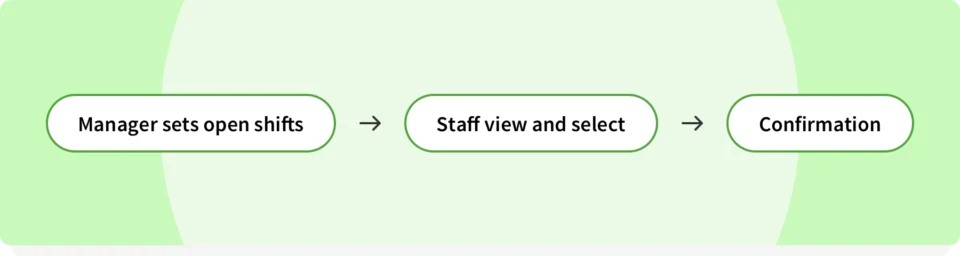
Also known as self scheduling, flexible scheduling is an approach that allows supervisors to determine what the work schedule needs based on demands and requirements, and then lets the workers choose (or trade) shifts for themselves.
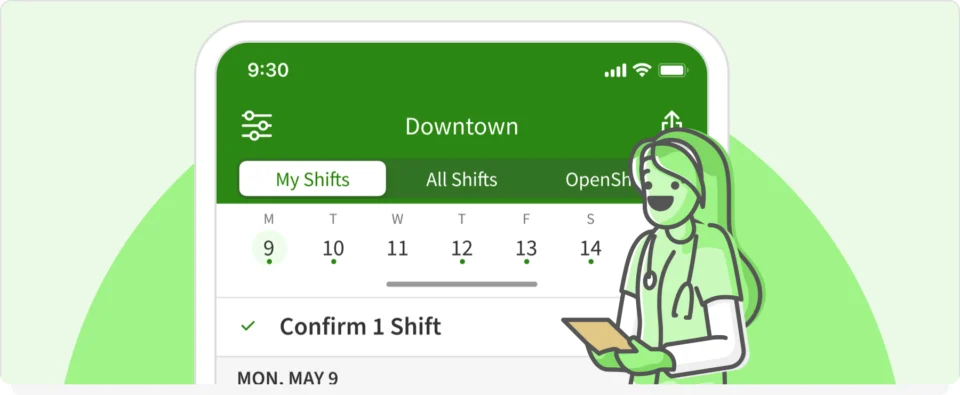
Using apps or other tools, employees can see what shifts are available. They can select what they want, they can trade with others if a conflict pops up in their plans, and they can communicate about what they are doing.
In other words, there’s no need for the middle man. Managers don’t have to set every individual schedule, they don’t have to handle requests to change shifts— employees do that.
For managers or supervisors, it leads to easier and faster scheduling, even in times when customer demand is uncertain, because every aspect of a shift doesn’t have to be tightly planned.
For employees, it gives them more control over how they balance their personal and work life and they no longer blame managers for bad schedules.
Flexible scheduling has become a long-term workforce strategy in many industries, including healthcare. Organizations use healthcare staff scheduling to improve employee satisfaction, reduce employee turnover, and respond more effectively to changing staffing needs.
Common types of flexible scheduling in healthcare
Healthcare organizations may use several scheduling models, depending on staffing needs, patient volume, and department requirements. Here are a few common options:
- Nurse self scheduling, where employees select available shifts within approved guardrails
- Compressed workweeks, such as three 12-hour shifts
- PRN or per diem scheduling to plug gaps in the schedule
- Shift swapping, which allows employees to trade shifts without requiring managers to revise the schedule
- Flexible start and end times for departments where coverage allows greater flexibility
Hospital scheduling software helps businesses manage these scheduling models while maintaining compliance and addressing staffing issues in healthcare.
Why flexible scheduling in healthcare works
While flexible scheduling might be an easy fit for the hourly workplace, it might seem a bit difficult to bring into healthcare with its training and credentialing requirements for workers.
The healthcare industry isn’t exactly known for having a great work-life balance, which is the key ingredient flexible scheduling brings to the table. Yet flexible scheduling isn’t something new in healthcare; it’s been a viable and in-use approach since 1963.
The stressful nature of healthcare jobs is why flexible scheduling was introduced over 60 years ago. The hope was in achieving three outcomes:
- Empower nurses to live more balanced lives. When work-life balance is out of whack, stress and negative attitudes run rampant.
- Increase predictability of scheduling. With flexible scheduling, time is freed up for supervisors responsible for setting schedules. Employees aren’t hit with schedule “surprises” since they are involved with the process.
- Encourage communication about the schedule. Because flexible scheduling is collaborative, there is more communication among stakeholders who are choosing and trading shifts.
While flexible scheduling was first injected into the healthcare industry back in the 1960s, it is as relevant today as then, and maybe even more so.

Why flexible scheduling in healthcare is necessary
As we’ve just shown, flexible scheduling is compatible with the healthcare industry. But even more to the point is that it is necessary in the healthcare industry.
The reality today is that the healthcare workforce is dwindling in numbers. Even before the pandemic, the numbers were clearly headed downward to the point that the federal government was considering options to deal with the situation. Some shortages are in geographic regions (e.g. rural areas) and in fields of study.
This issue was on the radar even 20 years ago, when a study pinpointed what was behind the growing shortage:
- The large Baby Boomer population was aging and would require significant healthcare resources.
- Nurses and other healthcare personnel who are Baby Boomers are aging out of the workforce, and there are fewer graduates to replace them.
- Chronic diseases have increased across the population.
- Recruitment of young nurses is difficult because of poor incentives when compared to other industries.
Depleted workforce. Growing needs. Difficult recruitment hurdles.
This is what the healthcare industry faces, and that’s why the industry needs to find a way to attract workers to the field.
The benefits of flexible scheduling for nurses
As mentioned earlier, flexible scheduling has been growing in other industries. Healthcare workers have friends who are benefiting from this approach, and they see how it makes life less stressful. This means, you’re recruiting not just against other healthcare facilities, but even other industries.
Good for recruitment and retention
Success with flexible scheduling means you create a competitive advantage by simply attracting and retaining the best talent when the competition is fierce. Even the slightest advantage in your employee benefits package can be a deal breaker or maker for a new hire.
When potential hires see flexible scheduling as part of the deal, they know that you’re addressing employee burnout, that you care enough to give them some autonomy over their lives, and that if you’re willing to work with them and allow them a say in when they work, you care about what is important to them.
Good for patients and quality care
It’s not just the healthcare workers who benefit from flexible scheduling. Patients benefit, too, simply because of the problems flexible scheduling solves that has historically led to reduced quality of patient care.
- Employee burnout and turnover. Turnover for registered nurses has increased in recent years. This costs organizations between $4.4 to 7 million a year. Those costs are passed onto patients or lead to cost-cutting measures that affect patient care.
- Reduced absenteeism. When nurses quit, or are frequently absent, a greater workload is put on the other workers, who may become stressed or distracted. It also creates a lack of consistency in individual patient care. When nurses have control over their work lives, they can adjust their schedule to fit what’s going on and are more likely to show up for the shifts they have committed to.
- Increased employee engagement. Engaged employees have good attitudes, and that carries over into how they treat coworkers as well as patients. Giving workers autonomy over their work-life balance is an excellent way of creating engaged employees. It creates a sense of collaboration among groups or teams.
Excellent patient care builds a reputation, and you will find that will also become its own recruitment tool.
Start your free 14-day trial of When I Work! Click here to start scheduling your employees today.
Making flexible scheduling a reality
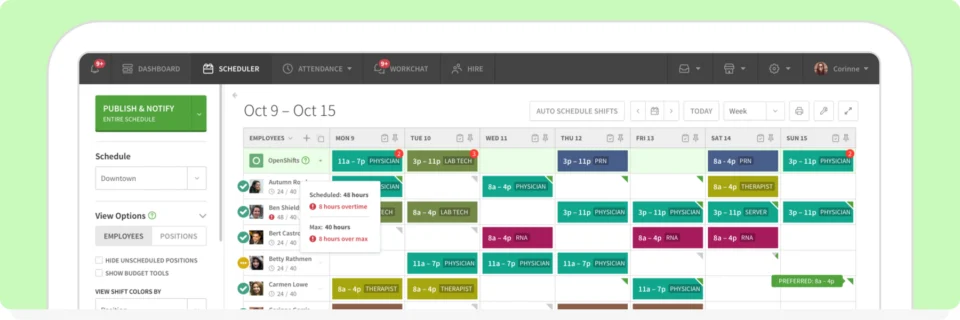
Flexible scheduling works best when healthcare organizations establish clear guardrails. Leaders must identify minimum staffing levels, set easy-to-understand overtime rules, and establish department-specific coverage expectations.
If you want to make the switch, encourage staff participation early. Employees are more likely to embrace self scheduling for nurses when they understand the rules and trust the system. Clear communication also reduces scheduling conflicts and increases accountability.
The final pillar for success is healthcare scheduling software that supports self scheduling and shift trading. Look for a solution that gives employees mobile access so they can stay connected and exercise control over when they work.
Flexible scheduling in healthcare FAQs
What is flexible scheduling in healthcare?
Flexible scheduling refers to a structure that allows healthcare employees to choose, swap, or request shifts within set guidelines. It gives nurses and other authorized employees more control over their schedules while helping managers maintain adequate coverage levels.
How does flexible scheduling benefit nurses?
Nursing staff can enjoy a healthier work-life balance and a greater sense of autonomy, both of which are good for morale. Nurses can also address burnout by choosing days and times that let them rest between shifts. Over time, self scheduling can lead to less fatigue and better retention.
What’s the difference between flexible scheduling and self scheduling?
Flexible scheduling is a broad term that encompasses different strategies, which may include self scheduling. Self scheduling is a specific method where nurses choose their shifts within set guidelines.
Does flexible scheduling affect patient care quality?
Yes. Flexible scheduling reduces burnout and absenteeism, which leads to a better patient experience. Healthcare organizations that implement flexible scheduling can also improve retention and staffing stability.
What tools do healthcare organizations use to implement flexible scheduling?
Many organizations use healthcare scheduling software that supports self scheduling and shift swapping. The right software makes it much easier to implement and sustain a flexible scheduling strategy within your healthcare facility.
How do you get started with flexible scheduling at a hospital or clinic?
Start by noting your staffing requirements and setting scheduling rules. Define when scheduling requests must be in and make the process as fair as possible for everyone. Introduce the system gradually so you have time to work out the bugs before rolling it out across the entire organization.