People Management
22 Employee Engagement Activities To Boost Team Morale

Engaged employees do more than show up. They collaborate more effectively, stay longer, serve customers more efficiently, and drive measurable results. In fact, highly engaged teams are 23% more profitable, and companies with strong engagement see faster growth and better overall performance.
But engagement doesn’t happen by accident. It comes from creating a workplace where people feel valued, supported, and connected. And that’s exactly where employee engagement activities can make a difference.
The activities below are fun, practical, and easy to adapt for any team, whether you’re running a restaurant, managing a retail staff, operating a healthcare facility, or coordinating a fast-paced hospitality crew. These employee engagement ideas help reduce turnover, boost morale, and make your team feel part of something bigger.
Quick summary
If you’re looking for simple employee engagement activities, here are some easy wins:
- Workplace parties, special days, and appreciation events that help employees feel seen
- Peer recognition, employee-led clubs, and games that build connection
- Learning lunches, training sessions, and career development opportunities
- Flexible scheduling, surveys, and direct communication channels that give employees more ownership
- Wellness activities, competitions, and team-building games for daily motivation
Most of these activities work for in-person, remote, or hybrid teams, and they help support productivity, retention, and culture year-round.
Key takeaways
- Employee engagement activities strengthen morale, improve teamwork, and increase productivity
- The best activities give employees ownership and help them connect across departments
- Recognition, learning opportunities, and wellness initiatives all support long-term retention
- Engagement improves when employees feel heard, valued, and supported
- Tools like When I Work help boost engagement every day with better scheduling, communication, and shift management
Did you know?
Having an up-to-date, easy-to-access staff schedule can improve engagement, reduce stress, and cut miscommunication.
Try When I Work free for 14 days and see how a clearer schedule supports a more connected team.
What is employee engagement?
Employee engagement is the emotional commitment an employee feels toward their work, their team, and the organization’s goals. Engaged employees care about results. They feel connected to the mission. They show up with intention.
This shows up in the day-to-day: how they collaborate, support coworkers, solve problems, and communicate.
Are they invested, responsible, and excited about projects? Can they collaborate, and do they respect each other? If so, you likely already have healthy employee engagement. If not, there are several things you can do to boost morale and motivate your employees.
If you’re not seeing that level of energy or ownership across your team, the employee engagement activities below are an easy place to start.
Why does employee engagement matter?
If an employee can technically do their job, does it really matter if they’re “engaged”?
Yes. Absolutely.
Research shows that engaged employees are:
- Happier
- More productive
- More likely to stay
- Better with customers
- More proactive and collaborative
Businesses with engaged employees grow three times faster. The most engaged teams? They’re four times more likely to outperform competitors.
If you want to boost morale, enhance performance, and minimize staffing headaches, these activities are a powerful way to build momentum.
22 fun employee engagement activities
There are many ideas on how to engage employees, but the goal should always be to prioritize activities that put employees at the center.
Here are some of the most effective employment engagement activities to boost morale and teamwork.
1. Workplace parties

Most companies throw annual summer and winter parties to celebrate another year of business. Festivities can make people feel as if they’re a valued part of the organization. Some workplace party ideas to boost engagement include:
- Halloween parties
- Thanksgiving dinners
- Potluck meals
- Ugly sweater parties
Invite families when possible to increase connection. To keep costs down, consider hosting daytime events or partnering with local businesses.
2. Learning lunches
Learning lunches strengthen employee communication and collaboration. Start a sign-up sheet for people to volunteer to offer presentations on something that’s important to them. Advertise what the presentation will be about each week.
You’ll find that it’s a great way for your team to get to know each other, practice their presentation skills, and feel valued at work. Rotate presenters across departments, celebrate birthdays, and explore new topics together.
3. Employee games, tournaments, and competitions
Employees love getting involved in games. Tournaments and competitions build camaraderie, and they don’t have to be fancy. Consider hosting a ping pong or pool tournament, or challenge the office to a bake-off. Even creating a fantasy football league can have a positive impact on the employees at your organization. Some offices also host 5K races and other sporting events.
Start small with something that can be easily accomplished, such as a board game or a puzzle in a conference room, and build from there. Or come up with some options and ask your team members what they’d be most interested in.
4. Special days

Special days such as “bring your dog to work day” change the pace and give employees something to look forward to. Other ideas? Bring your child to work day, pajama day, or even a “no uniform” day can all engage and excite employees.
Have each team pick a theme for a day and try it out to see which one gets the most participation. You can even run surveys to identify which days lead to the highest engagement and build on those results.
5. Training
Training often gets a bad reputation for being boring, but it doesn’t have to be. Bringing in a great speaker, hosting a hands-on session, or offering employee-led micro-trainings can turn learning into an energizing engagement activity.
Use webinars, short videos, book summaries, or department spotlights to keep things fresh. Even better, ask employees what skills they want to build, or design learning sessions around common team challenges.
When training feels relevant, practical, and respectful of people’s time, it becomes one of the most effective employee engagement activities you can offer.
Improve engagement in minutes
Make training, sign-ups, and coordination easier by keeping everything in one place.
Start scheduling and communicating with When I Work and take advantage of your free 14-day trial.
Start Boosting Staff Engagement Now!
6. Recognition programs
Recognition programs keep employees motivated because they reinforce positive behaviour and make people feel appreciated. Zappos is a great example, offering peer-to-peer rewards, fun perks, and even recognition-based parking spots.
A simple way to start is with a peer nomination program where employees call out small acts of teamwork or excellent service. Choose one winner each week or month and offer a small reward, such as a gift card.
Recognition doesn’t need to be expensive. It just needs to be consistent, visible, and fair.
7. Sporting events

Local sporting events can bring employees and families together in an easy, low-pressure way. Whether you choose baseball, basketball, soccer, or a minor league game, these outings build camaraderie beyond the workplace.
If budgets are tight, consider starting with discounted tickets or standing-room-only events. If you have a marathon or community run nearby, consider hosting a team watch party or cheering station instead.
The goal is simply to create shared experiences in a fun, relaxed environment.
8. Team-building activities
Offsite team-building activities are employee favourites. Bowling, escape rooms, laser tag, wine or brewery tours, mini-golf, or outdoor adventure activities naturally help employees bond.
For remote or hybrid teams, virtual team-building games work just as well. Trivia, online escape rooms, collaborative puzzles, or show-and-tell sessions help remote workers stay connected.
Don’t overthink it. Select activities that are enjoyable, straightforward, and inclusive. The shared laughter and downtime are what boost engagement.
9. Bar nights
Bar nights provide employees with an opportunity to unwind and connect socially. They work best when offered as an optional supplement, rather than the main cultural activity.
Include alcohol-free options, choose venues with trivia or games, and make sure events are accessible for all schedules.
When done well, bar nights help teams build relationships without the structure of a formal activity.
10. Fundraisers and charity days

Charity events foster engagement by allowing employees to unite around a meaningful cause. Let the team pick causes they care about: toy drives, food banks, school supply collections, animal shelter donations, charity walks, or local volunteering.
When employees organize and lead these initiatives, participation increases and community pride grows.
11. Barbecues and picnics
After a long winter of being cooped up indoors, hosting a barbecue or picnic when the weather starts to get better is a great way to help employees feel refreshed and appreciated. No one wants to be stuck inside on the first warm day of spring. Take advantage of that feeling by getting your staff outside and offering them a fun meal.
Again, start small to see if it works. Consider offering to cover the main dish and hosting a potluck of sides and desserts. This is an easy and stress-free way to thank your employees and give them a break from their day-to-day responsibilities.
12. Wellness programs
Showing your employees that you value their health and wellness is a great way to increase engagement. Offer yoga classes or a discount to a local gym. Bring in a mindfulness coach to do a workshop and guided meditation.
You can also create a competition out of it and offer prizes for double recognition. Maybe there’s a contest to see who can get the most steps each week, or who can create the most delicious recipe using healthy ingredients, with everyone getting to taste-test and vote. Make it fun, and your team will get twice the benefits.
13. Employee-led clubs

Have a few runners on staff? Start up a running group so they can enjoy some time together doing what they love. You may have a few voracious readers who would love a book club. Open the door for employees to start the clubs or groups that are important to them. It makes them feel valued and engaged in a way that lets them bring their authentic selves to work.
14. Career development programs
Starting a management training group or holding a weekly meeting where employees can discuss how to develop competencies for promotion is a great way to increase engagement. Investing in your employees and understanding what they want is a great way to show them you care. Not only will you be investing in the future of your company, but your staff will also know there’s a long-term place for them on your team, and they’ll be more likely to stay on.
15. Employee surveys and feedback
Ask your employees how they’d like to be engaged. But here’s the catch: be sure you’re listening and ready to act on some suggestions. There’s nothing that’ll make employees feel disengaged faster than being asked what they think and feeling like no one cares about their answer.
Use an anonymous survey tool to make your employees feel more comfortable opening up to you.
Better scheduling improves engagement
Flexible, predictable schedules improve morale more than most people think. With When I Work, employees can set availability, request time off, and swap shifts, all without breaking your workflow.
16. Flexible work arrangements

If possible, offer remote work options to your staff. You might find your team is more engaged when they’re not dealing with the stress and hassle of a commute. Remote work not an option? No worries, you can still use flexible scheduling to give your employees a voice in their schedule. They’ll feel more valued, and you’ll get better shift coverage.
You post the shifts that need to be filled, and your employees can choose the options that best fit into their personal lives.
Tip: There’s software that can save you up to 15 hours per week creating the staff schedule, and makes flexible scheduling easier for everyone involved. Try When I Work for free.
17. Employee referral programs
Workers are more engaged when they like their coworkers. Create an employee referral program to find exceptional workers who already know your current staff and enjoy being around them.
Ensure your team is aware of available openings in your workplace and offer an incentive if their referral is hired.
Be sure to thank employees for referrals who don’t get hired as well. Maybe you could enter everyone who refers candidates into a monthly draw for a gift card. That creates an incentive to keep referring workers.
18. Company-wide book clubs & TED Talk discussions
Increase motivation and engagement by hosting company-wide discussions on thought-provoking books that relate to your industry or field. If you don’t think your team would be interested in reading a book, keep it a little lighter by showing a TED Talk and discussing it with your staff to see what you all can use in your day-to-day work life.
19. Employee appreciation programs
Recognizing your employees for going above and beyond is a great way to increase engagement. Some will find it motivating and work hard to achieve that award. Some won’t, but that doesn’t mean they’re not as important, so make sure you find small ways to recognize them, too. Years-of-service awards are a great way to call out your appreciation for someone’s dedication to your business.
20. Coffee break initiatives

Coffee breaks have always been a simple yet effective way for employees to unwind, connect, and recharge during a hectic workday. For shift-based and hourly workers, these short breaks can be a lifeline to building relationships with their colleagues.
- In-person coffee breaks: For teams working on-site, incorporating in-person coffee breaks is easy. Consider setting up a dedicated coffee corner or lounge in the workspace where employees can gather during their breaks. Rotate schedules slightly to allow different team members the opportunity to mingle over a cup of coffee. This not only promotes bonding but also fosters cross-departmental understanding.
- Virtual coffee breaks: For employees with remote shifts or teams that are distributed, virtual coffee breaks can be a great alternative. Organize short video calls where team members can join with their favorite beverage, allowing them to maintain connections even from afar. This ensures that everyone, regardless of their work location, gets an opportunity to engage and interact.
Regular coffee breaks, whether virtual or in-person, can play a crucial role in fostering employee camaraderie, facilitating natural discussions, and enhancing overall morale.
21. Cultural celebrations
Celebrate the diverse cultures represented in your workforce. Host themed days where employees can share their traditions, foods, and stories, fostering a sense of belonging and appreciation among all employees.
Not sure where to start? Ask employees to volunteer to be a part of a committee where they can choose what holidays and customs are celebrated.
22. Using team communication software
Get your team talking to each other and make it easy for them with a team messaging app. When you use scheduling software like When I Work, which includes team messaging, you can keep everything work-related all in one place. So your employees know exactly how to get in touch with you and each other. They’ll be more likely to engage because there’s no confusion about whether they should text, call, or email.
Check out: 10 Best Team Communication Apps To Stay Connected
How When I Work improves team engagement
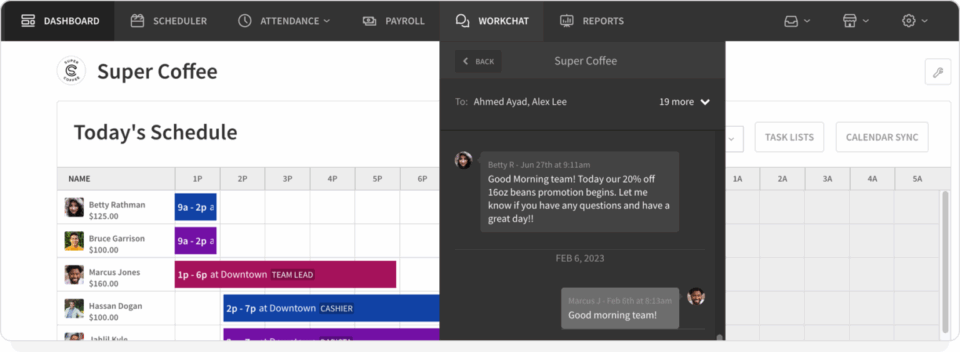
When employees have predictable schedules, real control over their availability, and an easy way to communicate with their team, engagement naturally increases. 85% of employees and managers engage with When I Work on a weekly basis, as it provides them with clarity, autonomy, and fewer surprises.
With When I Work, employees get:
- 24/7 access to the most current schedule
- Easy time-off requests and availability management
- Shift swaps and drops without chaos
- Built-in team messaging so communication stays connected and organized
Customers consistently tell us
“We’d have days where we were each sending out several hundred text messages. Our thumbs are happy we moved away from that. Everything stays on the platform.”
– Spencer Russel, Event & Media Technologies
When communication, scheduling, and accountability improve, employee engagement rises. Every shift, week after week. Try When I Work free for 14 days and see how much it helps your employee engagement.
Team engagement starts here
Engaged employees make every aspect of team management easier. By investing in just a few employee engagement activities, you can strengthen morale, improve retention, and reduce avoidable friction throughout the workplace.
Ready to support engagement every day, not just during activities?
Start your free trial of When I Work and see how much smoother your shifts, communication, and team culture can be.
Employee engagement activity FAQs
Employees often have similar concerns about what actually drives engagement, how frequently to update activities, and how to measure success. These FAQs are designed to answer the most common search queries and provide managers with practical next steps they can use immediately.
How can employee surveys and feedback sessions enhance employee engagement?
Employee surveys and feedback sessions increase employee engagement because they provide workers with a meaningful voice in decisions that impact their work. When employees feel heard, their engagement rises dramatically. Gallup reports that when managers act on feedback, engagement improves by up to 80%.
To maximize impact, feedback sessions must be followed by real action, even small wins. Otherwise, surveys can worsen disengagement.
What is the role of employee engagement in customer satisfaction?
Employee engagement and customer satisfaction are closely linked. Highly-engaged employees deliver 10% higher customer ratings because they communicate better, solve issues faster, and care more about outcomes.
Engaged teams also experience:
- Fewer service errors
- Faster resolution times
- More positive customer interactions
If your team works in retail, hospitality, healthcare, or the restaurant industry, this improvement can directly impact revenue.
How often should engagement activities change?
Most organizations benefit from refreshing engagement activities every quarter, or at least twice per year. It prevents the “we’ve done this before” fatigue that reduces participation.
Shorter, more consistent activities (like weekly recognition, monthly team games, or quarterly off-sites) create more impact than one large annual event.
A good rule of thumb:
- Weekly: Micro-engagement (recognition, small games, pulse checks)
- Monthly: Team-building activities, or team-building games for work
- Quarterly: Larger events or development workshops
How can a company measure the success of its employee engagement activities?
You can measure engagement success using a combination of qualitative and quantitative metrics:
- Participation rates in activities
- Pulse survey scores (engagement, belonging, satisfaction)
- Schedule compliance and shift coverage
- Retention and turnover trends
- Customer satisfaction scores (CSAT, NPS)
- Productivity and attendance data
According to Gallup, organizations that improve engagement see 78% lower absenteeism and 23% higher profitability, which makes engagement tracking a strong ROI contributor.
What’s the most cost-effective employee engagement activity?
The most cost-effective engagement activities are those that build a connection without requiring a budget. These include:
- Peer recognition and shoutouts
- Short team-building games
- Employee-led clubs
- Team messaging channels
- Feedback sessions and pulse surveys
- More predictable and flexible schedules
Research shows that schedule flexibility alone increases engagement and reduces turnover, making scheduling improvements one of the highest-ROI engagement strategies you can implement quickly.
Get started today. Sign up for your free trial of When I Work now!
Article sources
1. Gallup. “Q12 Employee Engagement Survey.” Accessed November 25th, 2025
2. Forbes. “Employee Engagement: What and Why,” June 25th, 2015
3. Forbes. “Innovator’s Challenge: Unleash Peer-To-Peer Recognition.” June 6th, 2017
4. Gallup. “How Effective Feedback Fuels Performance.” January 19th, 2024